
Night Chapter 4 Questions and Answers: A Comprehensive Guide
Delving into Elie Wiesel’s “Night,” Chapter 4 presents harrowing experiences at Auschwitz. Examining questions related to this chapter, often found in PDF study guides, reveals themes of dehumanization, faith, and survival.
Origins of “At Night” and Time Expressions
The phrase “at night”, denoting a specific point in time, has historical roots tracing back to older English usage. Initially, “night” functioned more as a defined period, and the preposition “at” indicated a point within that period. This contrasts with “in the night,” suggesting a duration during the nighttime hours. Early time expressions weren’t as rigidly defined as today; the evolution reflects a growing need for precision.
Interestingly, discussions surrounding “Night” by Elie Wiesel, often explored in Chapter 4 question-and-answer PDFs, frequently highlight the loss of time’s meaning for the prisoners. The relentless horrors of Auschwitz blurred the distinction between day and night, rendering conventional time expressions almost irrelevant. The constant struggle for survival overshadowed any sense of normal temporal awareness.
Therefore, analyzing the origins of “at night” provides a fascinating counterpoint to the narrative’s depiction of time’s disintegration within the concentration camp setting. The very structure of language, and how we mark time, is challenged by the experiences described.

Historical Usage of “At Night”
Tracing the historical usage of “at night” reveals a gradual solidification of its meaning. In older texts, variations like “in the night” were more common, often implying activity during the nighttime period. However, “at night” progressively became the standard for indicating a specific time within the night. This shift reflects evolving grammatical preferences and a desire for concise expression.
Considering Elie Wiesel’s “Night,” particularly Chapter 4, and the accompanying study questions often found in PDF format, the historical context adds a layer of understanding. The prisoners’ experiences deliberately strip away such linguistic niceties. The precise phrasing of “at night” becomes almost absurd when contrasted with the chaotic, timeless reality of Auschwitz.
The meticulous tracking of time, represented by phrases like “at night,” stands in stark opposition to the prisoners’ loss of control and the blurring of temporal boundaries. Analyzing this contrast highlights the power of language and its vulnerability in the face of extreme trauma. The very act of naming the time feels almost defiant.
The Evolution of “Night” as a Time Indicator
The conceptualization of “night” as a distinct time period evolved alongside human understanding of celestial cycles and daily rhythms. Initially, “night” likely referred simply to the absence of sunlight. Over time, it became associated with rest, darkness, and a period separate from “day.” This evolution is reflected in language, with “night” gradually acquiring grammatical functions beyond a mere descriptor.
Relating this to Elie Wiesel’s “Night,” and the questions posed in Chapter 4’s PDF study guides, the symbolic weight of “night” intensifies. It’s not merely a time of day; it embodies the prisoners’ despair, fear, and the loss of hope. The darkness mirrors their internal state, and the prolonged “night” of the Holocaust represents a spiritual void.
The narrative’s consistent use of “night” reinforces its thematic importance. Questions focusing on specific events “at night” prompt reflection on how darkness amplifies suffering and obscures morality. The evolution of the word’s meaning parallels the prisoners’ descent into a world devoid of light – both literal and metaphorical.
“In the Night” vs. “At Night”: Grammatical Differences
The prepositions “in” and “at” when used with “night” demonstrate subtle yet significant grammatical distinctions. “At night” generally refers to nighttime as a general period, a habitual occurrence, or a specific point within the night. Conversely, “in the night” suggests something happening during the entirety of the nighttime period, often implying a sense of being enveloped by darkness or a prolonged event.
Considering questions from “Night” Chapter 4 PDF guides, this distinction is crucial. Instances described “at night” – a selection, a roll call – pinpoint events within the broader darkness. However, if the narrative emphasizes a feeling of being lost throughout the entire night, “in the night” might be more appropriate, though less common.
While “at night” is overwhelmingly preferred in modern English, understanding the nuance helps analyze Wiesel’s stylistic choices. The deliberate use of either preposition could subtly alter the emotional impact, emphasizing either a specific moment or the all-encompassing dread of the nocturnal environment within Auschwitz.
Correct Usage: “At Night” or “In the Night”
Determining the correct preposition – “at” or “in” – when referencing “night” hinges on context. Generally, “at night” is the standard and overwhelmingly preferred usage in contemporary English. It denotes nighttime as a general time of day, a recurring event, or a specific moment occurring during the night. For example, “The selection took place at night,” is grammatically sound.
“In the night,” while not incorrect, is considerably less common and carries a more literary or archaic feel. It suggests being immersed within the entirety of the night, often implying a sense of duration or being surrounded by darkness. Analyzing “Night” Chapter 4 questions and PDF study materials reveals events typically described “at night.”
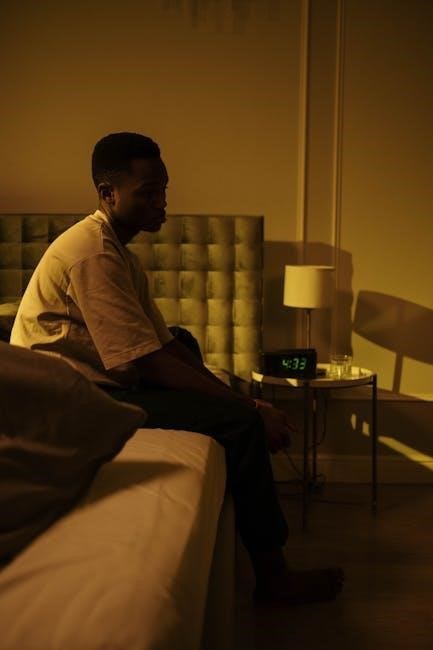
Wiesel’s prose, however, might occasionally benefit from considering “in the night” to emphasize the prisoners’ prolonged suffering and the oppressive atmosphere. However, for clarity and adherence to modern usage, “at night” remains the most appropriate choice for most descriptive purposes related to the events of that chapter.
Specific Evening vs. General Evening: “On the Night Of”
The phrase “on the night of” distinctly signifies a particular, specified evening. It pinpoints a unique occurrence tied to a specific date or event, contrasting with the general timeframe indicated by “at night” or “in the night.” When analyzing “Night” Chapter 4 questions and accompanying PDF resources, understanding this distinction is crucial for interpreting the narrative’s timeline.
For instance, “On the night of the selection, Eliezer feared for his father’s fate” focuses attention on that precise evening’s events. It’s not simply *a* night, but *the* night of the selection – a pivotal moment. This specificity is vital for comprehending the escalating horrors and the characters’ reactions.
Conversely, “They marched at night” describes a recurring practice. “On the night of” emphasizes a singular, memorable occasion. Recognizing this nuance aids in accurately answering comprehension questions and appreciating Wiesel’s deliberate use of language to highlight key moments within the broader context of the Holocaust.
Examples of “On the Night Of” in Context
Examining “Night” Chapter 4, and related PDF question sets, reveals how “on the night of” anchors specific events. Consider: “On the night of their arrival at Auschwitz, the men were stripped of their belongings and dignity.” This isn’t a general description of nights at the camp; it’s about the immediate, devastating experience upon arrival.
Another example: “On the night of the first selection, Eliezer and his father clung to each other, fearing separation.” The phrase highlights the terror and uncertainty of that particular evening, a turning point in their ordeal. It’s a focused moment, not a recurring one.
Analyzing questions within study guides often requires identifying these contextual cues. A question might ask, “What was significant about the events on the night of the selection?” The answer hinges on understanding that “on the night of” directs attention to a unique, critical moment within the narrative, demanding precise recall of details from Chapter 4.
“Good Night” vs. “Nighty-Night”: Nuances in Usage
While seemingly interchangeable, “good night” and “nighty-night” possess distinct connotations, rarely relevant to “Night” Chapter 4 analysis in PDF study guides, but important for linguistic understanding. “Good night” is versatile, suitable for formal and informal settings, functioning as a standard farewell, even between strangers.
“Nighty-night,” however, carries a more intimate and playful tone. Originating in the 1930s-50s, it’s typically reserved for close relationships – parents and children, or affectionate partners. Its somewhat whimsical nature makes it less appropriate for professional contexts or initial acquaintances.
Considering the stark realities depicted in Chapter 4, the contrast is striking. The prisoners experienced no gentle “nighty-night”; their nights were filled with terror and uncertainty. Questions focusing on the emotional landscape of the chapter wouldn’t explore these linguistic nuances, but understanding the difference highlights the absence of comfort and tenderness in their experience. The formality of “good night” feels distant from their situation.
“Nighty-Night” ⎯ Historical Origins and Popularity
The phrase “nighty-night,” a diminutive and affectionate farewell, emerged as a popular expression between 1930 and 1950. While irrelevant to direct analysis of “Night” Chapter 4 questions found in PDF study guides, its history offers a fascinating linguistic contrast. It served as a common way to wish someone a peaceful sleep, particularly between loved ones.
Its rise coincided with a broader trend of informal and endearing language gaining traction in everyday conversation. The repetition of “night” – “nighty-night” – adds a playful, childlike quality, reinforcing its association with comfort and security. This contrasts sharply with the brutal conditions described in Wiesel’s work.
Over time, “nighty-night” gradually declined in widespread usage, perceived by some as overly sentimental or even slightly archaic. However, it retains a nostalgic charm and continues to be used within close family circles. Considering the complete absence of such tenderness in the chapter, the phrase serves as a poignant reminder of what was lost.
Formality and Appropriateness of “Nighty-Night”
While “nighty-night” conveys warmth, its informality renders it unsuitable for professional or formal settings. This distinction is, of course, entirely separate from the context of analyzing “Night” Chapter 4 questions within a PDF study guide, but highlights linguistic nuance. Its playful tone makes it best reserved for intimate relationships – parents with children, or close friends.
Using “nighty-night” with strangers or in a business environment could be perceived as unprofessional or even condescending. The phrase’s inherent sweetness clashes with the expectations of formal communication. “Good night,” conversely, maintains a level of politeness appropriate for a wider range of interactions.
The historical shift in its popularity also impacts its appropriateness. While common mid-20th century, its current usage can feel dated to some. Considering the stark realities depicted in Chapter 4, the contrast between such gentle phrasing and the horrors experienced is particularly striking, emphasizing the loss of innocence.
Night Adventure Game: A Walkthrough
“Night Adventure” challenges players with exploration and puzzle-solving within a mysterious nocturnal environment. This is, naturally, distinct from dissecting “Night” Chapter 4 questions found in a PDF, but shares a thematic connection to darkness and uncertainty. The initial stages involve gathering essential items – a flashlight is crucial – and navigating the dimly lit landscape.
Early puzzles often require observation of environmental clues and manipulation of objects. Pay close attention to shadows and sounds, as they frequently indicate hidden pathways or interactive elements. The game emphasizes a non-linear approach, allowing players to explore different areas at their own pace.
Later levels introduce more complex challenges, demanding strategic thinking and resource management. Successfully completing “Night Adventure” hinges on understanding the game mechanics and utilizing collected items effectively. Remember to save frequently, as unexpected events can occur, and progress can be lost.
Understanding the Game Mechanics of Night Adventure
“Night Adventure” employs a core set of mechanics centered around exploration, inventory management, and puzzle resolution. While seemingly unrelated to analyzing “Night” Chapter 4 questions in a PDF, both require careful attention to detail. The game utilizes a point-and-click interface, allowing players to interact with the environment and collect items.
Inventory space is limited, forcing players to prioritize essential objects. Combining items is frequently necessary to overcome obstacles. The flashlight mechanic is paramount, revealing hidden areas and clues, but its battery life must be carefully monitored. Conserving battery power is crucial for prolonged exploration.
Puzzle difficulty escalates throughout the game, demanding logical reasoning and pattern recognition. The game also features a subtle hint system, providing assistance without explicitly revealing solutions. Mastering these mechanics is essential for progressing through “Night Adventure” and uncovering its secrets.
Solving Puzzles in Night Adventure
Puzzles within “Night Adventure” are intricately woven into the narrative, often requiring players to decipher environmental clues and manipulate objects. Though distinct from dissecting “Night” Chapter 4 questions found in a PDF, both demand analytical skills. Many puzzles involve restoring power to different sections of the environment, necessitating the location and correct placement of fuses or batteries.
Code-breaking puzzles are prevalent, utilizing symbols and patterns found throughout the game world. Players must carefully observe their surroundings and correlate visual cues with potential solutions. Logic puzzles test the player’s deductive reasoning, requiring them to identify relationships between objects and events.
Inventory-based puzzles demand creative item combinations. Experimentation is key, as the correct solution may not be immediately obvious. Successfully solving puzzles unlocks new areas and progresses the storyline, revealing more of the game’s mysteries.
Achieving the Game’s Objective in Night Adventure
The ultimate goal in “Night Adventure” centers around uncovering the truth behind the protagonist’s mysterious arrival and escaping the enigmatic location; While seemingly unrelated to analyzing “Night” Chapter 4 questions within a PDF, both require a focused pursuit of understanding. This involves navigating treacherous environments, solving complex puzzles, and evading shadowy entities.
Players must collect key items scattered throughout the game world, each contributing to the unraveling of the central mystery. These items often unlock new areas or provide crucial clues about the protagonist’s past. Successfully completing puzzle sequences reveals fragments of a hidden narrative, gradually piecing together the story.
The final objective typically involves confronting a powerful antagonist or activating a mechanism that allows for escape. Strategic thinking and skillful execution are essential for overcoming these challenges and achieving a successful conclusion.
Night Vision Effect ID and Implementation
Within the game’s code, “night_vision” serves as the unique identifier for the visual enhancement effect. This ID is crucial for activating and manipulating the feature, allowing players to navigate darkened areas more effectively. Interestingly, this technical aspect parallels the need for careful textual analysis when addressing “Night” Chapter 4 questions found in PDF study guides – both demand precise identification of key elements.
Implementation typically involves assigning a duration and intensity level to the effect. The provided code snippet demonstrates a duration of “99999999,” effectively creating a near-permanent night vision state. The intensity, set at “255,” dictates the level of visibility granted.
Developers utilize these parameters to fine-tune the gameplay experience, balancing realism with player convenience. Understanding these numerical values is essential for modifying the effect or troubleshooting any related issues.

Duration and Level of Night Vision Effect
The duration of the night vision effect, set at an exceptionally high value of “99999999,” essentially renders it perpetual within the game. This prolonged visibility contrasts sharply with the fleeting moments of hope and despair explored in Elie Wiesel’s “Night,” particularly when analyzing Chapter 4 questions in PDF format – where understanding the timing of events is critical.
The intensity level, designated as “255,” represents the maximum achievable brightness for the effect. This full illumination allows players to perceive details otherwise obscured by darkness. However, this constant clarity differs from the gradual loss of faith and increasing darkness of the human spirit depicted in the novel;
Adjusting these parameters – duration and level – directly impacts gameplay. A shorter duration would necessitate frequent re-activation, while a lower level would limit visibility. These choices influence the player’s experience, mirroring the nuanced interpretations required when tackling complex questions about “Night.”
The Significance of Numerical Values in Night Vision Settings
Within the “Night Adventure” game, the numerical values assigned to the night vision effect – specifically, 99999999 for duration and 255 for level – aren’t arbitrary; they represent extremes. This echoes the extreme conditions endured by Elie Wiesel and others in Auschwitz, a central focus when analyzing “Night” Chapter 4 questions found in PDF study guides.

The immense duration value symbolizes a persistent, unwavering visibility, a stark contrast to the fading hope and encroaching darkness experienced by the characters. The maximum level (255) signifies complete illumination, potentially obscuring subtle details. This parallels the overwhelming trauma that can sometimes overshadow individual memories.
These numbers aren’t merely technical parameters; they’re symbolic representations of control and perception. Manipulating these values alters the player’s experience, much like interpreting the nuances of Wiesel’s prose alters our understanding of the Holocaust. Understanding these values enhances gameplay and provides a unique lens for examining the themes within “Night.”
“Winter is Coming” Song Lyrics Analysis

The lyrics of “Winter is Coming” by S.SIN, with its imagery of a frozen wasteland and inherent coldness, resonate with the bleakness depicted in Elie Wiesel’s “Night,” particularly Chapter 4. Analyzing these lyrics provides a metaphorical parallel to the dehumanizing conditions within Auschwitz, a frequent topic in “Night” Chapter 4 question and answer PDFs.
The song’s themes of abandonment and the nurturing power of cold mirror the prisoners’ isolation and the brutal indifference of their captors. The line “Winter is Coming, not corruption, destined abundance” suggests a cyclical nature of suffering and resilience, echoing the enduring spirit of those who survived.
The lyrics’ emphasis on interconnectedness – “all things are subordinate, born of each other, opposing each other” – reflects the complex relationships and power dynamics within the concentration camp. Ultimately, the song serves as a haunting allegory for the enduring human capacity for both cruelty and survival, mirroring the core themes explored in Wiesel’s harrowing memoir.
Themes and Symbolism in “Winter is Coming”
The song “Winter is Coming” utilizes potent symbolism, mirroring the thematic weight of Elie Wiesel’s “Night,” especially as explored in Chapter 4 questions and answers often found in PDF study guides; The recurring motif of ‘winter’ transcends a mere season, representing hardship, death, and spiritual desolation – parallels to the prisoners’ experiences at Auschwitz.

The “frozen wasteland” symbolizes the emotional and physical barrenness inflicted upon those stripped of their humanity. The “coldness…nourishing all things” presents a paradoxical image, suggesting that even within suffering, a perverse form of existence persists. This echoes the struggle for survival detailed in Chapter 4.
The song’s exploration of cyclical fate – “destined abundance” – hints at the inevitability of suffering, a key theme in “Night.” The interconnectedness of opposing forces symbolizes the complex power dynamics within the camp. Ultimately, the song’s symbolism reinforces the enduring human condition amidst unimaginable cruelty, a central focus of analysis when studying “Night.”
The Meaning of “” (Winter is Coming)
Analyzing “Winter is Coming” reveals a layered meaning, resonating with the core themes of loss and impending doom present in Elie Wiesel’s “Night,” particularly when addressing Chapter 4 questions found in PDF study guides. The phrase itself isn’t simply a meteorological forecast; it’s a premonition of suffering, a warning of inevitable hardship and the loss of innocence.
The song’s lyrics, describing a journey through a “frozen wasteland,” symbolize the spiritual and emotional desolation experienced by the characters in “Night.” The “coldness” isn’t merely physical but represents the dehumanization and moral decay within the concentration camps. The phrase suggests a cyclical nature to suffering, an acceptance of fate, and the enduring presence of evil.
Considering the context of “Night,” “Winter is Coming” embodies the relentless approach of death and the erosion of hope. It’s a stark reminder of the fragility of life and the enduring power of darkness, mirroring the harrowing realities faced by Wiesel and his fellow prisoners. The song’s meaning, therefore, is deeply intertwined with themes of survival and the search for meaning in the face of unimaginable horror.

Morning and Night: 24-Hour Time Framework
The consistent use of “morning” and “night” in English reflects a fundamental structuring of our daily experience, a framework crucial for understanding the temporal context within Elie Wiesel’s “Night,” and often explored in Chapter 4 question analysis found in PDF guides. This division, based on the 24-hour cycle, dictates our routines and perceptions of time’s passage.
“Morning” typically signifies beginnings, hope, and activity, while “night” represents endings, rest, and often, uncertainty or danger. In “Night,” this duality is powerfully illustrated; the daylight hours offer fleeting moments of normalcy, contrasted sharply with the terrors unfolding under the cover of darkness at Auschwitz. The shift between these periods amplifies the emotional impact of Wiesel’s narrative.
This established framework allows for clear communication and shared understanding of events. When analyzing Chapter 4, referencing “night” immediately evokes the atmosphere of fear, loss, and the systematic brutality experienced by the prisoners. The consistent application of these terms reinforces the narrative’s emotional weight and historical significance.
Daily Habits and Time Division: Morning vs. Night
The division of a day into “morning” and “night” profoundly shapes our daily habits and perceptions, a concept subtly yet powerfully reflected in the experiences detailed in Elie Wiesel’s “Night,” particularly within the context of Chapter 4, often dissected in accompanying PDF question sets. Our routines are largely dictated by this natural cycle – activity during daylight, rest during darkness.
“Morning” often signifies preparation, work, and social interaction, while “night” is associated with winding down, introspection, and sleep. However, within the confines of Auschwitz, as depicted in Chapter 4, these established patterns are brutally disrupted. The prisoners’ days and nights are devoid of normalcy, marked instead by relentless labor, starvation, and constant fear.

Analyzing questions related to Chapter 4 reveals how Wiesel utilizes this contrast to emphasize the prisoners’ loss of humanity. The absence of a peaceful “night” or a hopeful “morning” underscores the dehumanizing conditions they endure. Understanding this fundamental time division enhances comprehension of the narrative’s emotional and thematic depth.
The Consistent Use of “Morning” and “Night” in English
The terms “morning” and “night” demonstrate remarkable consistency in English usage, serving as foundational markers within our 24-hour time framework. This consistency provides a stable linguistic backdrop against which the disruptions experienced in Elie Wiesel’s “Night,” specifically Chapter 4 – frequently explored through PDF question analysis – become even more stark.
Despite evolving societal norms, “morning” continues to denote the period of sunrise and early activity, while “night” consistently represents darkness and rest. This predictable usage allows authors, like Wiesel, to leverage these terms for symbolic effect. The deliberate lack of a comforting “night” or a promising “morning” within the concentration camp highlights the prisoners’ utter deprivation.
Questions pertaining to Chapter 4 often probe the emotional impact of this disrupted rhythm. The consistent understanding of “morning” and “night” in the English language amplifies the horror of a reality where these natural divisions are rendered meaningless, emphasizing the systematic destruction of the prisoners’ humanity and hope.
One-Night Stand: Historical Context of the Term
Interestingly, the phrase “one-night stand” possesses a history remarkably distant from its contemporary sexual connotation. Originating in the 1880s, it initially described the practice of theatrical troupes performing in a town for a single night before moving on – a “stand” referring to a temporary performance location. This historical context offers a sharp contrast to modern interpretations, a divergence rarely explored within “Night” Chapter 4 PDF question sets.
The evolution of the term underscores the fluidity of language and how meanings can dramatically shift over time. While Elie Wiesel’s “Night” doesn’t directly engage with this linguistic evolution, understanding it highlights the power of words to be re-appropriated and imbued with new significance.
Considering this origin, questions focusing on the loss of stability and permanence in Chapter 4 – a key theme when analyzing the prisoners’ experiences – gain a subtle resonance. The fleeting nature of life within Auschwitz mirrors, ironically, the original “one-night stand” of a traveling theatre, albeit with devastating consequences.
The Original Meaning of “One-Night Stand” (1880s)
Prior to its modern association with casual encounters, “one-night stand” denoted a specific practice within the world of traveling theatre during the 1880s. It referred to a performance given by a dramatic company in a town for just a single evening before continuing their tour. The “stand” signified the temporary venue – often a hastily erected stage – where the performance took place.
This usage emphasized the transient nature of the performance and the company’s presence. It wasn’t about intimacy, but rather logistical constraints and the demands of a nomadic lifestyle. Questions related to “Night” Chapter 4, though focused on the Holocaust, can indirectly benefit from this historical understanding.
Considering the prisoners’ own forced displacement and the ephemeral nature of their existence within the camps, the original meaning of “one-night stand” offers a poignant, if unexpected, parallel. The lack of permanence, the constant uprooting – these resonate with the theatrical troupe’s brief engagements, highlighting the fragility of life and belonging.
Evolution of “One-Night Stand” to its Current Meaning
The semantic shift of “one-night stand” from theatrical practice to its contemporary connotation occurred gradually throughout the 20th century. While initially describing a temporary performance location, the phrase began to acquire undertones of transience and impermanence. This evolution wasn’t immediate; the connection to casual sexual encounters wasn’t firmly established until well into the latter half of the century.
The transition likely stemmed from the idea of a fleeting, temporary connection – mirroring the short-lived nature of a theatrical engagement. Over time, this broadened to encompass any brief, inconsequential relationship. Analyzing “Night” Chapter 4, one can observe a stark contrast: the prisoners’ desperate yearning for lasting connection amidst utter disposability.
The modern meaning, first appearing prominently around the mid-20th century, now almost exclusively refers to a casual sexual encounter without expectation of further commitment. This evolution underscores how language adapts and reflects changing social norms, a concept applicable when interpreting the historical context of Wiesel’s memoir.